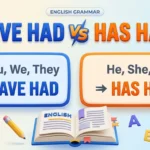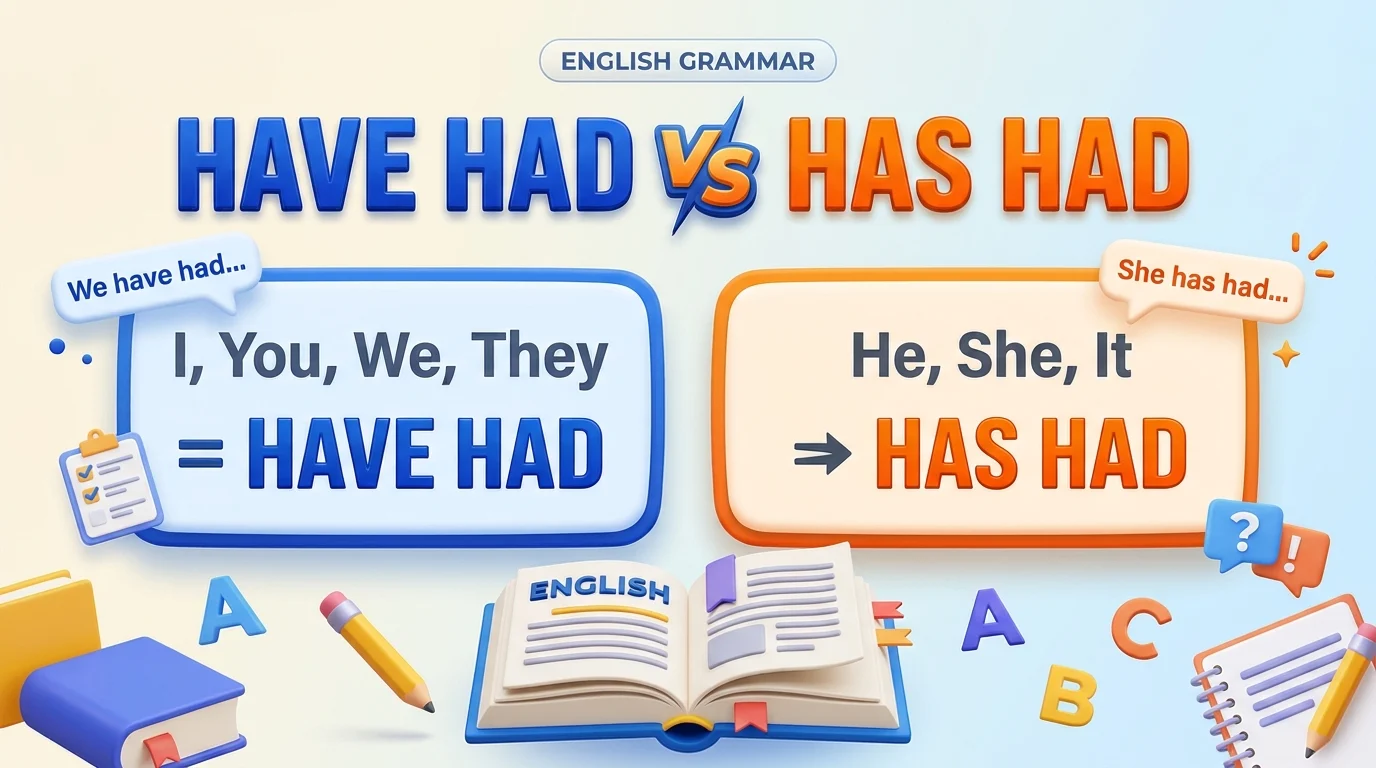
Understanding the difference between have had vs has had can make English grammar much easier. Both expressions are grammatically correct, and both are forms of the present perfect tense. However, they are used with different subjects. The main difference is that have had is used with I, you, we, and they, while has had is used with he, such , it, and singular nouns.
Although these expressions look similar, choosing the wrong one can make a sentence grammatically incorrect. For example, you should say “such has had a busy day,” but “They have had a busy day.” In this guide, you’ll learn the meanings, grammar rules, sentence structures, and differences between have had and has had. You’ll also find practical examples, common mistakes, and easy tips to help you use both expressions correctly in everyday American English.
Quick Answer: Have Had vs Has Had
Have had is used with I, you, we, and they, while has had is used with he, such , it, and singular nouns. Both expressions describe experiences, situations, or actions connected to the present. For example, “I have had lunch” and “such has had lunch.”
Why Do People Confuse Have Had and Has Had?
People often confuse these expressions because both contain the word “had” and have almost the same meaning. The difference is not in the action or experience being described but in the subject of the sentence.
Both expressions are formed using the present perfect tense. The first word changes according to the subject, while the second word remains the same.
Here are the main reasons for confusion:
- Similar appearance: Both expressions contain the same past participle, “had.”
- Same basic meaning: Both describe experiences, possession, or situations that have a connection to the present.
- Subject agreement: English learners sometimes forget that different subjects require different helping verbs.
- Two forms of have: The word “have” can work as a main verb or a helping verb, which can make the structure confusing.
The easiest way to understand the difference is to focus on the subject before choosing have or has.
What Does Have Had Mean?
Have had is a present perfect verb phrase used with the subjects I, you, we, and they. It describes an experience, action, possession, or situation that happened in the past but is connected to the present.
The first word, “have,” is the helping verb, while “had” is the past participle of the main verb “have.”
When to Use Have Had
Use have had with these subjects:
- I
- You
- We
- They
- Plural nouns
For example:
- I have had enough sleep today.
- You have had many opportunities.
- We have had a wonderful experience.
- They have had some problems recently.
- My friends have had their lunch already.
More Examples of Have Had in Sentences
Here are additional practical examples to understand how have had works in everyday English:
- I have had this phone for three years.
- We have had several meetings this week.
- They have had a difficult time recently.
- You have had enough practice to improve.
- I have had a headache since morning.
- My parents have had a long journey.
- We have had great success with this project.
- The students have had their final exams.
- They have had many chances to prove themselves.
- I have had a busy schedule lately.
Key point: Use have had when the subject is I, you, we, they, or a plural noun.
What Does Has Had Mean?
Has had is a present perfect verb phrase used with third-person singular subjects, such as he, she, it, and singular nouns.
Like have had, it describes experiences, situations, actions, or possession that began or happened in the past and have a connection to the present.
In this expression, “has” is the helping verb, and “had” is the past participle of the main verb “have.”
When to Use Has Had
Use has had with these subjects:
- He
- She
- It
- Someone
- Everyone
- A person
- A singular noun
For example:
- He has had a busy morning.
- She has had enough time to prepare.
- It has had a positive effect.
- My brother has had a new job for six months.
- Everyone has had an opportunity to participate.
More Examples of Has Had in Sentences
Here are additional examples showing how to use has had correctly:
- She has had a wonderful day.
- He has had several chances to improve.
- My teacher has had many years of experience.
- The company has had financial difficulties.
- My sister has had a new phone since Monday.
- The baby has had enough milk.
- John has had a busy week.
- This restaurant has had many customers today.
- Everyone has had a chance to speak.
- The dog has had its food.
Key point: Use has had when the subject is he, she, it, or a singular noun.
Have Had vs Has Had: Key Differences
The main difference between have had and has had is subject-verb agreement. Both expressions belong to the present perfect tense, but their helping verbs change depending on the subject.
Here is a simple comparison table:
| Grammar Point | Have Had | Has Had |
|---|---|---|
| Helping verb | Have | Has |
| Main verb | Had | Had |
| Tense | Present perfect | Present perfect |
| Used with | I, you, we, they | He, she, it |
| Noun agreement | Plural nouns | Singular nouns |
| Meaning | Past experience connected to the present | Past experience connected to the present |
| Example | We have had lunch. | She has had lunch. |
| Negative | Have not had | Has not had |
| Question | Have you had…? | Has she had…? |
Simple Comparison Examples
Notice how the helping verb changes when the subject changes:
- I have had breakfast. / He has had breakfast.
- We have had a meeting. / She has had a meeting.
- They have had enough time. / John has had enough time.
- You have had a great opportunity. / My friend has had a great opportunity.
The meaning remains almost identical. Only the subject determines if you should use have had or has had.
Grammatical Structure of Have Had and Has Had
Both expressions follow the present perfect tense structure.
1. Positive Sentence Structure
Subject + have/has + had + object
Examples:
- I have had breakfast.
- We have had enough time.
- She has had a busy day.
- He has had a wonderful experience.
2. Negative Sentence Structure
To make a negative sentence, add “not” after have or has.
Subject + have/has + not + had + object
Examples:
- I have not had lunch.
- They have not had enough sleep.
- She has not had any problems.
- He has not had a chance to explain.
Common contractions include:
- Have not = Haven’t
- Has not = Hasn’t
Examples:
- I haven’t had breakfast yet.
- She hasn’t had enough rest.
3. Question Sentence Structure
For questions, place have or has before the subject.
Have/Has + subject + had + object?
Examples:
- Have you had breakfast?
- Have they had enough time?
- Has she had lunch?
- Has he had any experience?
4. WH-Question Structure
Use question words such as what, why, where, and how before have or has.
Examples:
- What have you had for lunch?
- Why have they had so many problems?
- How long has she had this phone?
- Where have you had your meetings?
When Should You Use Have Had?
Use have had when the subject is I, you, we, they, or a plural noun.
Here are some common situations where have had is appropriate.
1. Talking About Past Experiences
Use have had to describe experiences that are relevant to the present.
Example: We have had many memorable experiences together.
2. Talking About Possession
Use have had when something started belonging to someone in the past and continues into the present.
Example: I have had this laptop for two years.
3. Talking About Recent Situations
Use have had when describing a recent situation or event.
Example: They have had a difficult week.
4. Talking About Health or Feelings
Use have had to describe physical conditions or feelings connected to the present.
Example: I have had a headache since this morning.
When Should You Use Has Had?
Use has had when the subject is he, she, it, or a singular noun.
Here are common situations where has had is correct.
1. Talking About Someone’s Experience
Use has had when describing an individual’s past experience.
Example: She has had several opportunities to travel abroad.
2. Talking About Possession
Use has had when a singular person or thing has possessed something over a period of time.
Example: He has had this car since 2022.
3. Describing Recent Events
Use has had to describe a recent experience or situation involving a singular subject.
Example: My brother has had a busy day.
4. Describing Health Conditions
Use has had when talking about a health-related experience involving a singular subject.
Example: She has had a fever since yesterday.
Common Mistakes With Have Had and Has Had
Even experienced English speakers sometimes make mistakes when choosing between have had and has had. Most errors happen because people forget to match the helping verb with the subject.
Here are common mistakes and their corrections.
| Incorrect Sentence | Correct Sentence |
|---|---|
| He have had lunch. | He has had lunch. |
| She have had enough sleep. | She has had enough sleep. |
| I has had a good day. | I have had a good day. |
| They has had many problems. | They have had many problems. |
| My brother have had a car. | My brother has had a car. |
| We has had enough time. | We have had enough time. |
| Everyone have had a chance. | Everyone has had a chance. |
| The students has had exams. | The students have had exams. |
Mistake 1: Using Have With Singular Subjects
Incorrect: She have had a busy day.
Correct: She has had a busy day.
Explanation: “She” is a third-person singular subject, so it requires has.
Mistake 2: Using Has With Plural Subjects
Incorrect: They has had dinner.
Correct: They have had dinner.
Explanation: “They” always takes have in the present perfect tense.
Mistake 3: Confusing Had Had With Has Had
Incorrect: She had had lunch yesterday, so she is hungry now.
Correct: She had lunch yesterday, so she is hungry now.
Explanation: Had had is the past perfect form and is used when discussing an earlier past event in relation to another past time or event. It is not interchangeable with has had.
Easy Memory Trick to Remember Have Had vs Has Had
If you struggle to remember which expression is correct, use this simple trick:
Remember: HE, SHE, IT = HAS HAD.
For all other common subject pronouns, use have had.
- I = Have had
- You = Have had
- We = Have had
- They = Have had
- He = Has had
- She = Has had
- It = Has had
You can also remember this simple rule:
Singular third-person subjects take has had, while I, you, and plural subjects take have had.
Try practicing with a few sentences every day. This will help you remember the correct form naturally.
Have Had vs Has Had in American and British English
There is no grammatical difference between have had and has had in American and British English. Both varieties follow the same subject-verb agreement rules.
For example:
- American English: She has had enough time.
- British English: She has had enough time.
- American English: They have had a wonderful experience.
- British English: They have had a wonderful experience.
The expressions are spelled and used the same way in both varieties. Differences in vocabulary or pronunciation do not change these grammar rules.
Similar and Related Expressions
Understanding related expressions can help you recognize the present perfect tense and avoid common grammar mistakes.
1. Have Had vs Had
Have had is present perfect, while had can be the simple past form of have.
Examples:
- I have had breakfast already.
- I had breakfast yesterday.
The first sentence connects a past action to the present, while the second describes a completed past event.
2. Has Had vs Had Had
Has had is present perfect, while had had is past perfect.
Examples:
- She has had enough experience.
- She had had enough experience before starting the job.
Had had may look repetitive, but it is grammatically correct.
3. Have vs Has
Have and has are present-tense forms of the verb “have.”
Examples:
- I have a car.
- They have a house.
- He has a car.
- She has a house.
4. Have Been vs Has Been
Both expressions are forms of the present perfect tense, but they use the past participle “been” instead of “had.”
Examples:
- I have been busy.
- They have been helpful.
- He has been sick.
- She has been working.
FAQs:
1. What is the main difference between have had and has had?
The main difference is the subject used in the sentence. Have had goes with I, you, we, they, and plural nouns. Has had goes with he, she, it, and singular nouns. Both expressions belong to the present perfect tense.
2. Is have had grammatically correct?
Yes, have had is completely grammatically correct. It is used with I, you, we, they, and plural nouns. For example, “I have had enough time” and “They have had a great experience” are both correct sentences.
3. Is has had grammatically correct?
Yes, has had is also grammatically correct. It is used with third-person singular subjects, including he, she, it, and singular nouns. For example, “She has had lunch” and “My brother has had a busy day” are correct.
4. Can I use have had with he or she?
No. In standard English, he and she require has had, not have had. For example, “He has had a good opportunity” is correct, while “He have had a good opportunity” is incorrect.
5. Can I use has had with they?
No. They takes have had, even when referring to one person using singular they. For example, “They have had a difficult day” is correct. The pronoun they always takes have in the present perfect tense.
6. What is the difference between has had and had had?
Has had is the present perfect form, while had had is the past perfect form. Has had connects a past experience to the present. Had had describes an experience or action that happened before another point or event in the past.
7. Which is correct: everyone has had or everyone have had?
“Everyone has had” is correct because everyone is grammatically singular, even though it refers to multiple people. For example, “Everyone has had an opportunity to participate” follows the correct subject-verb agreement rule.
Remember This
Keep these simple rules in mind whenever you use have had or has had:
- Use have had with I, you, we, and they.
- Use has had with he, she, and it.
- Use have had with plural nouns.
- Use has had with singular nouns.
- Both expressions belong to the present perfect tense.
- Use “had had” when the past perfect tense is required.
The most important rule is to check the subject before choosing the helping verb.
Conclusion
The difference between have had vs has had is simple once you understand subject-verb agreement. Have had is used with I, you, we, they, and plural nouns, whereas has had is used with he, she, it, and singular nouns. Both expressions describe past experiences, actions, or situations that have a connection to the present. They follow the same present perfect tense structure, with only the helping verb changing according to the subject.
To improve your English grammar, practice using both expressions in positive sentences, negative sentences, and questions. Remember the simple trick: he, she, and it always take has had, while I, you, we, and they take have had. With regular practice and attention to the subject, you can use both expressions confidently in everyday conversations and writing.

I am Victor Daniel, an author passionate about creating creative and engaging Instagram bio ideas. I enjoy helping people express their personality, style, and identity through unique words.